













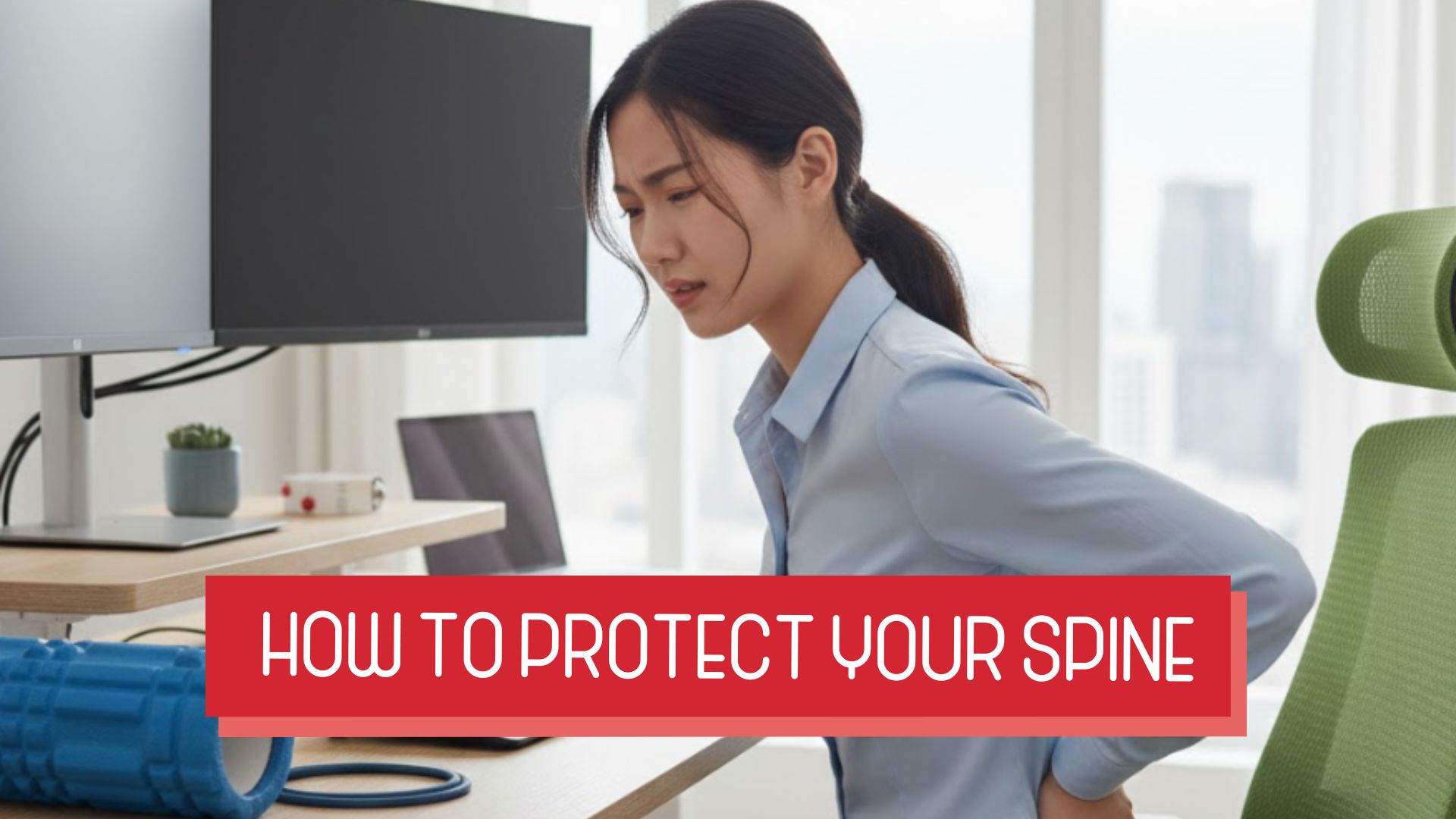
Back pain and spine issues are becoming more common, especially in busy cities in Singapore where people spend long hours sitting at a desk or standing for work. The spine is not designed for long periods of being still — whether that’s sitting at the computer for eight hours or standing behind a counter all day. Over time, these habits can create stiffness, muscle imbalance, and chronic pain.
The good news? Most spine problems are preventable with the right daily habits and supportive tools. Whether you’re working in an office or in retail/F&B, these tips can help you maintain a healthy, strong, and pain-free spine for years to come.
Why Certain Work Environments Cause Spine Issues
Two environments place the highest strain on your spine:
(1) Desk-Bound Office Work
People who sit more than 6–8 hours a day are at higher risk of:
Forward head posture
Neck stiffness
Weak core and glutes
Tight hips
Lower back compression
This often leads to discomfort, chronic pain, and even slipped discs if prolonged.
(2) Standing Jobs: Retail, F&B, Nursing, Hospitality
These workers often stand 6–12 hours a day, carrying trays, doing repetitive tasks, or bending frequently.
This causes:
Lower back fatigue
Muscle overcompensation
Knee and feet pain that spreads up to the spine
Compressed discs from prolonged standing
Both groups experience stress-related tension, poor sleep, and constant fatigue — all of which tighten the muscles around the spine even more.
How to Protect Your Spine: Essential Habits
1. Build an Ergonomic Workspace
Whether sitting or standing, your environment must support your natural spinal alignment.
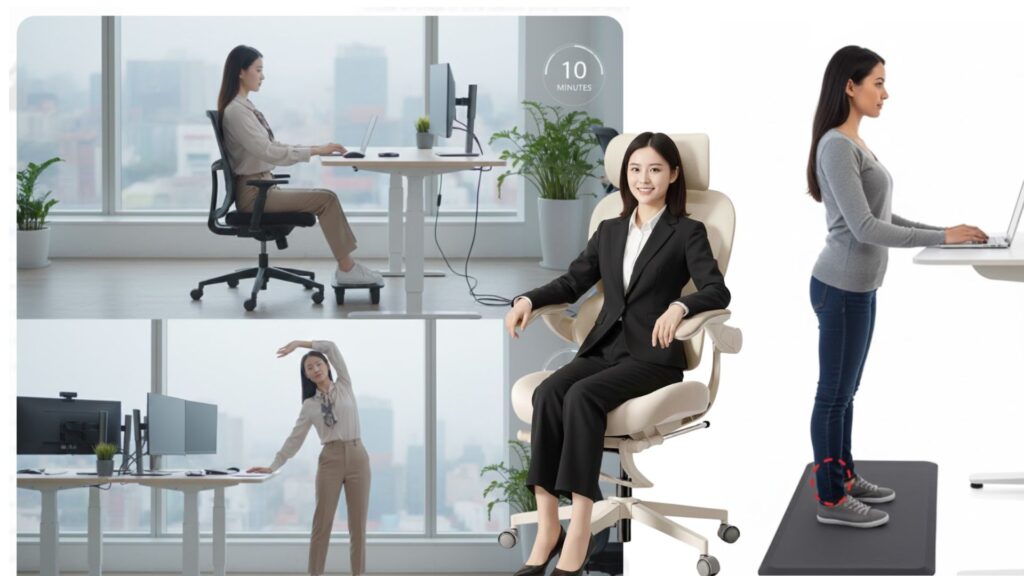
For desk workers:
Keep your screen at eye level
Use a supportive chair with lumbar support
Keep feet flat on the floor
Position your keyboard close enough to prevent hunching
For standing workers:
Switch posture every 10–20 minutes
Take micro-sitting breaks whenever possible
2. Move Every 20–30 Minutes
The spine hates staying in one position.
Try the 20–8–2 rule:
20 minutes working
8 minutes standing/stretching
2 minutes walking
This keeps the spine hydrated, mobile, and decompressed. It also boosts focus and productivity.
3. Strengthen the Muscles That Support Your Spine
A healthy spine depends on the muscles around it.
Focus on strengthening:
Core
Glutes
Lower back
Upper back
Simple exercises you can do anywhere:
Planks
Bird-dog
Cat-cow
Glute bridges
Back extensions
Shoulder openers
Just 5–7 minutes a day can change everything.
4. Prioritize Sleep and Recovery
Spinal discs rehydrate only when you sleep.
If your sleep quality is poor, your spine does not recover fully.This is why choosing the right pillow, mattress, and sleep posture makes a big difference.
What You Can Buy to Support Your Spine Daily
These are practical, affordable tools that actually help — not gimmicks, but real lifestyle-support items.
For Desk-Bound Workers (Office or Home Office)
1. Adjustable Laptop Stand
Keeps your screen at eye level and prevents hunching.
2. Ergonomic Office Chair with Lumbar Support
Supports the natural curve of your spine.
(If your chair doesn’t have lumbar support, add a cushion.)
3. Footrest
Helps maintain a neutral spine and reduces hip pressure.
4. External Keyboard + Mouse
Allows better posture and reduces shoulder strain.
5. Wrist Support Pad
Prevents repeated stress on the neck and shoulders.
6. Lumbar Support Cushion
Great for office workers who sit long hours or drive frequently.
7. Blue-Light Blocking Glasses
Reduces neck strain caused by leaning forward while squinting.
For Workers Who Stand Long Hours (Retail, F&B, Hospitality, Nurses)
1. Supportive Shoes with Arch Support
The spine starts from your feet — weak arch support = spine compression.
2. Anti-Fatigue Standing Mats
Reduces pressure on the lower back and knees.
3. Compression Socks
Improves circulation, reduces leg swelling, and lessens lower back fatigue.
4. Back Support Belt (use when lifting heavy items)
Helps maintain correct posture during lifting.
5. Portable Foot Roller or Massage Ball
Releases tension in feet and calves, reducing strain that travels up to the spine.
For Everyone — Sleep & Recovery Essentials
1. Orthopedic Pillow
Supports neck alignment and reduces morning stiffness.

2. Medium-Firm Mattress
Most reliable for maintaining spine alignment.
3. Magnesium Lotion or Spray
Helps muscles relax and reduce tension.
4. Foam Roller or Massage Gun
Loosens tight back, shoulders, and hips after long work hours.
5. Heat Packs
Helps relax stiff muscles from prolonged posture.
Conclusion: Your Spine Needs Daily Care, Not Once-a-Year Fixes
We often only notice our spine when it starts to hurt — but by then, your body is already signaling that it’s overloaded. Whether you work at a desk or stand all day, taking care of your spine is an investment in your long-term health, productivity, and energy levels.
Small adjustments throughout your day — plus the right supportive tools — can prevent long-term damage and help you live a more comfortable life.
Since you’re here, why not Read:
Best Pillows in Singapore for Better Sleep: Why a Good Pillow Can Transform Your Nights