












Dryness around the female private area can be uncomfortable, especially when the skin feels tight, rough, itchy or easily irritated. Whether it happens after showering, during hot and humid weather, around menstruation or because of friction from clothing, choosing the right moisturiser can make a difference to everyday comfort.
However, not every body lotion is suitable for intimate skin. The skin around the vulva is more delicate than many other parts of the body, and products containing fragrance, essential oils, whitening ingredients or harsh exfoliating agents may cause irritation.
If you are searching for the best moisturiser for female private parts in Singapore, this guide explores 10 gentle moisturising options, how to choose an appropriate product, where to apply it, and what to avoid. It also explains the difference between vulvar skin dryness and vaginal dryness, so you can make a more informed skincare decision.
The goal is simple: maintain comfortable, healthy external intimate skin without disrupting the body’s natural balance.

1. Why Does the Skin Around the Female Private Area Become Dry?
Dryness around the female private area can happen for several reasons. It does not necessarily indicate poor hygiene or an infection.
The external genital area, known as the vulva, contains delicate skin that can be affected by environmental conditions, hormonal fluctuations, personal care products and everyday friction.
Here are some common causes.
1.1 Hormonal changes
Oestrogen plays an important role in maintaining moisture, elasticity and tissue health in the vaginal and vulvar areas.
Changes in hormone levels may contribute to dryness, particularly:
Before or during menstruation.
During perimenopause and menopause.
After childbirth.
During breastfeeding.
When using certain hormonal medications.
Some women notice increased intimate dryness at particular points in their menstrual cycle.
1.2 Excessive washing
Washing the intimate area too frequently or using strong cleansing products can strip away natural oils from external skin.
Common irritants include:
Scented feminine washes.
Antibacterial soaps.
Perfumed shower gels.
Deodorising sprays.
Scented wet wipes.
The vulva does not need aggressive cleansing to remain hygienic.
1.3 Singapore’s hot and humid weather
Singapore’s tropical climate creates a combination of heat, humidity and perspiration.
Although humidity does not directly cause dry skin, sweating, friction and repeated cleansing can irritate sensitive external skin.
Wearing tight clothing for extended periods may also increase friction around the groin and bikini line.
1.4 Friction and hair removal
Shaving, waxing and tight underwear can contribute to irritation.
The skin may feel:
Rough.
Tight.
Slightly flaky.
Sensitive when touched.
Uncomfortable when walking.
A gentle external moisturiser or protective ointment may help reduce friction-related dryness.
1.5 Skin conditions
Sometimes, persistent dryness is associated with an underlying skin condition, such as eczema, contact dermatitis or lichen sclerosus.
If dryness comes with persistent itching, white patches, cracks, sores or changes in skin texture, consult a healthcare professional instead of relying on moisturiser alone.
2. What Is the Difference Between Vulvar Dryness and Vaginal Dryness?
This is one of the most important distinctions when choosing an intimate moisturiser.
Although people often use the terms interchangeably, the vulva and vagina are different anatomical areas.
| Area | Description | Appropriate care |
|---|---|---|
| Vulva | External genital skin, including the labia | Gentle external moisturiser or emollient |
| Outer labia | External folds of skin | Suitable fragrance-free emollient |
| Inner labia | Delicate inner folds | Avoid ordinary body lotions; seek appropriate medical guidance if symptomatic |
| Vaginal opening | Entrance to the vagina | Use products specifically intended for this area |
| Inside vagina | Internal vaginal canal | Vaginal moisturiser specifically formulated for internal use |
Important: Ordinary body moisturisers should never be inserted into the vagina. External skin moisturisers and internal vaginal moisturisers serve different purposes.
If you experience internal vaginal dryness, a vaginal moisturiser formulated for vaginal use may be more appropriate than petroleum jelly or ordinary body cream.

3. Top 10 Moisturisers for Female Intimate Skin
If you are looking for a moisturiser for dry skin around the female private area, prioritise products with simple formulations, minimal irritants and no added fragrance.
The following products are examples of emollients worth considering for external skin dryness. Their inclusion does not mean that every formulation is suitable for every vulvar area. Always check the product ingredients and instructions.
3.1 Vaseline Original Petroleum Jelly
Best for: External skin protection
Petroleum jelly helps reduce moisture loss by forming a protective barrier. It is a simple option for dry external vulvar skin, provided it does not cause irritation.
3.2 Hydromol Ointment
A rich emollient that helps soften dry skin and reduce moisture loss. It is one of the products mentioned in vulval skincare guidance.
3.3 Cetraben Cream
An emollient cream for dry skin. Check the formulation before applying it to delicate genital skin, as cream formulations may contain more preservatives than ointments.
3.4 Cetraben Ointment
A thicker alternative to the cream formulation. It helps create a barrier against moisture loss and friction.
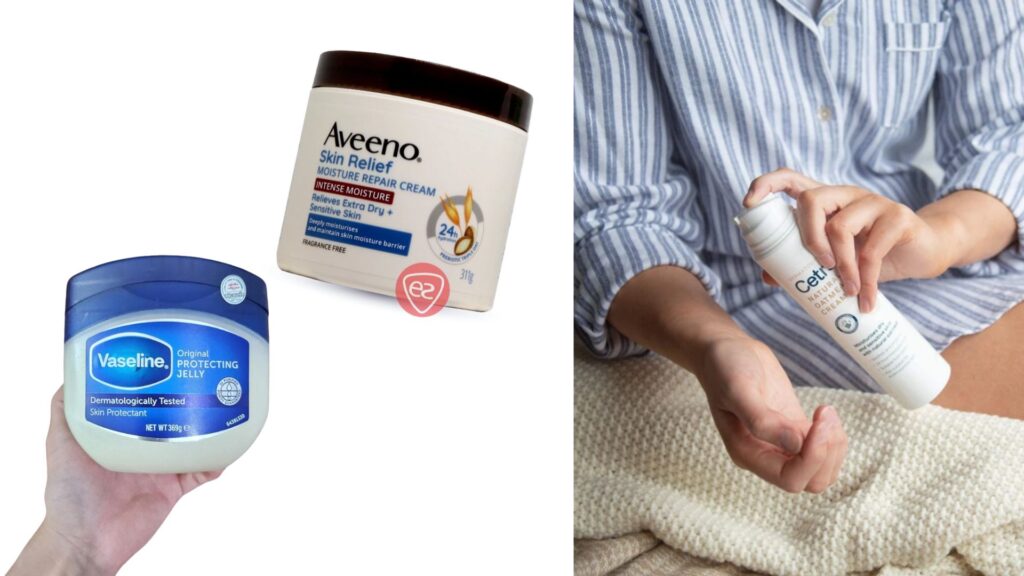
3.5 Aveeno Fragrance-Free Cream
Aveeno Daily Moisturising Cream for Relieves Extra Dry and Sensitive Skin
Some fragrance-free Aveeno formulations contain colloidal oatmeal and moisturising ingredients. However, not every Aveeno product is suitable for vulvar use, so check the exact formulation.
3.6 Diprobase Cream
An emollient cream used to soften dry skin. Check its ingredient list and test a small external area first.
4. How to Choose the Best Intimate Skin Moisturiser
Choosing an intimate skin moisturiser is not simply about finding the product with the highest hydration claims.
The important consideration is whether the formulation is gentle enough for external genital skin.
Here are five factors to consider.
4.1 Choose fragrance-free formulations
Fragrance is a common source of contact irritation.
Look for:
Fragrance-free.
Unscented.
Minimal ingredients.
No added essential oils.
No deodorising ingredients.
Remember that natural ingredients are not automatically safer. Botanical extracts and essential oils can also cause allergic reactions.
4.2 Consider ointments over lotions
Ointments are generally preferred for vulvar skin because they often contain fewer preservatives and provide a more protective barrier.
| Formulation | Texture | General suitability |
|---|---|---|
| Ointment | Thick and greasy | Strong moisture barrier |
| Cream | Medium thickness | General moisturising |
| Lotion | Lightweight | More ingredients and preservatives may be needed |
| Gel | Lightweight or slippery | Depends on formulation |
If your external skin is particularly sensitive, a simple ointment may be a better starting point than a scented body lotion.
4.3 Avoid unnecessary active ingredients
Your intimate skincare routine does not need the same active ingredients as your facial skincare routine.
Avoid experimenting with:
Retinol.
Glycolic acid.
Salicylic acid.
Strong vitamin C preparations.
Skin bleaching agents.
Exfoliating scrubs.
High-concentration essential oils.
These ingredients are not appropriate for routine moisturising of delicate vulvar skin.
4.4 Consider your skin sensitivity
If you have a history of eczema, contact dermatitis or sensitive skin, choose products with short ingredient lists.
Try one product at a time. Stop using it if you notice burning, increased itching, redness or swelling.
4.5 Check whether it is compatible with condoms
Petroleum jelly and oil-based ointments can weaken latex condoms.
If you need lubrication during sexual activity, use a lubricant specifically designed for intimate use and compatible with your contraception method.
5. How to Apply Moisturiser to the Female Private Area Safely
Applying moisturiser correctly is just as important as selecting the right product.
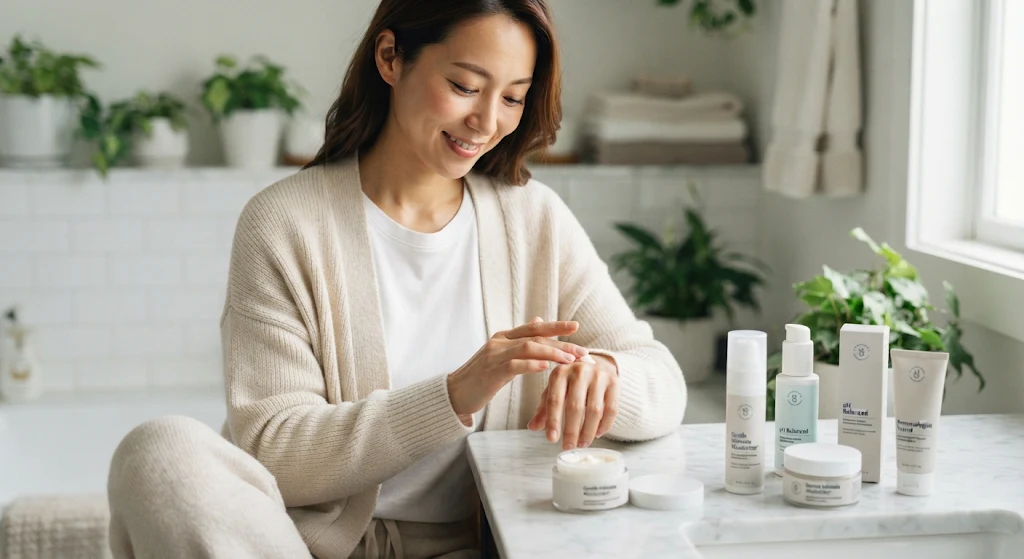
For external vulvar dryness, follow these steps.
Wash your hands before application.
Gently clean the external area using lukewarm water.
Avoid scrubbing or using exfoliating cloths.
Pat the skin dry with a soft towel.
Apply a very thin layer of suitable fragrance-free emollient to the affected external skin.
Avoid inserting the product into the vaginal opening.
Observe how your skin responds.
You can use an appropriate emollient regularly if it is comfortable and does not cause irritation.
When is the best time to apply intimate moisturiser?
After showering is often convenient because the external skin has been gently cleaned and dried.
Other suitable times may include:
Before bedtime.
After washing the external area.
When the skin feels dry or tight.
Before activities that cause friction, if recommended for the product.
Avoid excessive washing. Once daily is usually sufficient for routine vulvar hygiene.
6. What Ingredients Should You Avoid in Female Intimate Skin Products?
One common mistake is assuming that products marketed as feminine care are automatically suitable for vulvar skin.
Some products contain ingredients that may irritate sensitive external skin.
| Ingredient or product type | Why to be cautious |
|---|---|
| Fragrance / parfum | Can trigger contact irritation |
| Essential oils | May cause irritation or allergic reactions |
| Menthol | Can cause stinging or burning |
| Alcohol-heavy formulations | May worsen dryness or irritation |
| Strong exfoliating acids | Can irritate delicate skin |
| Whitening creams | May contain unsuitable active ingredients |
| Antibacterial washes | Can disrupt the skin’s natural balance |
| Scented intimate wipes | May trigger contact dermatitis |
A useful rule: If a product promises whitening, tightening, perfuming or deodorising your intimate area, it is worth questioning whether you actually need it.
Healthy vulvar skin does not need to smell like perfume or have a particular shade.
7. How to Maintain Healthy and Hydrated Intimate Skin in Singapore
Singapore’s warm weather makes everyday intimate skincare particularly important.
Sweat, friction and prolonged exposure to damp clothing can contribute to discomfort.
Here are seven practical habits.
7.1 Wear breathable cotton underwear
Cotton underwear can improve comfort by allowing better airflow.
Choose underwear that does not feel excessively tight around the groin.
7.2 Change out of sweaty clothing
After exercising, swimming or spending time outdoors, change into clean, dry underwear.
Avoid remaining in damp workout clothing for extended periods.
7.3 Avoid excessive intimate washing
You do not need to wash your vulva several times a day.
Use gentle external cleansing and avoid scented feminine washes.
7.4 Be careful with panty liners
Daily panty liners can create friction and prolonged contact with moisture.
If you need them, consider fragrance-free versions and change them regularly.
7.5 Avoid excessive shaving and waxing
Hair removal can cause irritation, ingrown hairs and small skin injuries.
Consider trimming instead of shaving if your skin is easily irritated.
7.6 Use a suitable emollient
If your external skin is dry, an appropriate emollient can help maintain its protective barrier.
A simple fragrance-free ointment may be more useful than a complicated intimate skincare product.
7.7 Allow your skin to breathe
When comfortable and practical, wear loose sleepwear and consider sleeping without underwear.

8. Where to Buy Female Intimate Skin Moisturisers in Singapore
If you are searching for a moisturiser for female private parts in Singapore, you may come across different products at local pharmacies and online retailers.
Here are some places to investigate.
Guardian Singapore: Check the skincare and sensitive-skin sections for fragrance-free emollients.
Watsons Singapore: Look for simple moisturising products and check the complete ingredient list.
Unity Pharmacy: Ask the pharmacist about suitable emollients for external vulvar dryness.
Local clinics: A GP or gynaecologist can assess persistent dryness and recommend an appropriate treatment.
- Shopee Singapore: Browse different brands, compare product formulations, packaging sizes and prices. Look for official brand stores or Shopee Mall listings to reduce the risk of purchasing counterfeit or unauthorised products.
Not every product listed in this guide is necessarily stocked locally. Availability, product names and formulations can vary.
What should you ask a Singapore pharmacist?
Instead of simply asking for feminine wash or intimate lotion, explain:
“I am experiencing dryness on the external vulvar skin. I am looking for a simple fragrance-free emollient that is suitable for sensitive genital skin.”
This helps the pharmacist distinguish between a general body moisturiser, an external skin emollient and an internal vaginal moisturiser.
9. When Is Intimate Skin Dryness a Sign of Something Else?
Moisturising can help with uncomplicated external skin dryness, but it cannot treat every cause of genital discomfort.
It is important to recognise when symptoms require medical attention.
| Symptoms | Possible explanation |
|---|---|
| Dryness and tightness | Skin dryness or irritation |
| Itching and redness | Contact dermatitis, eczema or infection |
| Thick white discharge with itching | Possible yeast infection |
| Unusual discharge or unpleasant smell | Possible vaginal infection |
| Small painful blisters or sores | Requires medical assessment |
| White patches or fragile skin | Possible lichen sclerosus |
| Persistent dryness with painful intercourse | Possible hormonal or vaginal dryness |
These symptoms are not enough to diagnose a condition. A clinician may need to examine the area or perform swabs.
Seek medical advice if symptoms persist, recur, worsen or are accompanied by unusual discharge, pain, sores, bleeding or skin changes.
Do not use antifungal creams, steroid creams or anti-itch products repeatedly without establishing the cause.
10. Frequently Asked Questions About Female Intimate Skin Moisturisers
These are common questions women ask when searching for the best moisturiser for dry private parts, sensitive vulvar skin and intimate skincare in Singapore.
1. Can I use Vaseline on my female private area?
Yes, plain Vaseline Original Petroleum Jelly can be used as a protective emollient on suitable external vulvar skin.
Apply a thin layer to the affected external area. Do not insert it into the vagina.
Remember that petroleum jelly is oil-based and can weaken latex condoms.
2. What is the best moisturiser for dry labia?
Simple, fragrance-free ointments are often a good starting point.
Options include Vaseline Original Petroleum Jelly, Epaderm Ointment and Hydromol Ointment.
The best choice depends on your skin sensitivity and the exact area being treated.
3. Can I use normal body lotion on my private parts?
It is better to avoid ordinary body lotions on delicate vulvar skin.
Many body lotions contain fragrance, botanical extracts and preservatives that may cause irritation.
Choose a simple emollient intended for sensitive skin instead.
4. Can I apply moisturiser to my inner labia?
The inner labia have delicate, more sensitive tissue.
Avoid applying ordinary body lotions, fragranced creams or products with active skincare ingredients there. If you have persistent dryness or discomfort, seek advice from a healthcare professional about an appropriate product.
5. Why is my private area dry even though I drink plenty of water?
External vulvar dryness is not necessarily caused by inadequate water intake.
It can be associated with hormonal changes, skin conditions, friction, excessive washing or irritating personal care products.
Drinking sufficient water supports general health but does not necessarily resolve local skin dryness.
6. Can I use Aveeno moisturiser on my private area?
Some fragrance-free Aveeno products are designed for sensitive external body skin.
However, not every formulation is suitable for vulvar use. Check the ingredients and avoid applying it internally.
A simple ointment may be a more appropriate first option for particularly sensitive vulvar skin.
7. Is intimate moisturiser the same as vaginal moisturiser?
No.
An intimate skin moisturiser generally refers to a product for external genital skin.
A vaginal moisturiser is specifically formulated for internal vaginal use or the vaginal opening, depending on its instructions.
Always check the product’s intended application area.
8. How often should I moisturise my private area?
For uncomplicated external dryness, a suitable emollient can be applied once or more daily according to your comfort and the product instructions.
You do not need to moisturise internal vaginal tissue with an ordinary skin moisturiser.
9. Can I use coconut oil as an intimate moisturiser?
Coconut oil is sometimes used as an external moisturising oil, but it is not suitable for everyone.
It can cause irritation or sensitivity in some individuals and is oil-based, meaning it can weaken latex condoms.
A simple, fragrance-free emollient is generally a more predictable starting point.
10. Does intimate moisturiser help with dark private parts?
Moisturisers can improve the appearance of dry, rough skin by softening its surface.
However, they do not reliably lighten natural pigmentation.
Vulvar skin naturally varies in colour, and darker pigmentation is normal.
Avoid bleaching products or strong exfoliating treatments on genital skin.
11. Can I use intimate moisturiser after shaving or waxing?
If the external skin is mildly dry after hair removal, a simple fragrance-free protective emollient may help.
However, avoid applying products to broken skin, cuts or inflamed bumps.
If you experience persistent redness, swelling, pus or pain, seek medical advice.
12. Why does my private area itch after applying moisturiser?
You may be reacting to an ingredient in the product.
Stop using it if you experience burning, redness, swelling or increased itching.
If symptoms continue after stopping the product, consult a healthcare professional.
13. Where can I buy moisturiser for female private parts in Singapore?
You can check Guardian, Watsons, Unity Pharmacy and reputable online pharmacies.
Look for simple fragrance-free emollients such as petroleum jelly or suitable ointment formulations.
If you are unsure whether a product is appropriate for vulvar skin, ask a pharmacist.
14. Can I use intimate moisturiser every day even without dryness?
There is generally no need to moisturise healthy external vulvar skin if it feels comfortable.
However, women who experience recurring vulvar skin irritation may benefit from regular use of an appropriate emollient under medical guidance.
15. Does menopause cause dry private parts?
Yes. Lower oestrogen levels during menopause can contribute to vaginal and vulvar dryness.
If the dryness is persistent or accompanied by painful intercourse, urinary symptoms or irritation, consult a gynaecologist. Vaginal moisturisers or prescribed local hormonal treatments may be appropriate.
16. Can I use the same moisturiser around my anus?
Not necessarily.
The skin around the anus is also sensitive and may be affected by moisture, friction, wiping and bowel movements.
A simple external barrier emollient may help protect dry skin, but persistent itching, bumps, bleeding or pain should be assessed rather than treated with moisturiser alone.
17. Is a water-based moisturiser better than an oil-based moisturiser?
Not necessarily.
Water-based creams and gels can feel lighter, while ointments often provide longer-lasting protection against moisture loss.
For sensitive vulvar skin, a simple ointment may be better tolerated because it often contains fewer preservatives.
18. Can intimate moisturiser prevent yeast infections?
No. A moisturiser does not prevent or treat yeast infections.
If you experience itching, unusual discharge, redness or discomfort, get assessed to establish the cause.
11. A Simple Intimate Skin Hydration Routine
You do not need an elaborate 10-step intimate skincare routine.
In fact, keeping your routine simple is often better for delicate vulvar skin.
| Time | Recommended routine |
|---|---|
| Morning | Gentle external cleansing and pat dry |
| After showering | Apply a suitable emollient if external skin is dry |
| During the day | Change out of sweaty clothing and avoid friction |
| Evening | Use a thin layer of suitable emollient if needed |
| Weekly | Review products that may be causing irritation |
Consistency and gentle care matter more than the number of products you use.
Conclusion: Choose Gentle Hydration Over Complicated Intimate Skincare
Finding the best moisturiser for female private parts is not about purchasing the most expensive feminine skincare product or following complicated beauty routines.
It is about understanding the difference between external vulvar skin and internal vaginal tissue, recognising the causes of dryness and choosing a gentle product that supports your skin barrier.
For external vulvar dryness, simple fragrance-free emollients such as Vaseline Original Petroleum Jelly, Epaderm Ointment and Hydromol Ointment are options worth considering. Ointments are often preferred for delicate genital skin because they provide protective moisture barriers and may contain fewer potentially irritating preservatives.
For women in Singapore, everyday habits also matter. Wear breathable underwear, avoid excessive washing, minimise friction and choose personal care products carefully.
Most importantly, remember that persistent itching, bumps, unusual discharge, sores or changes in skin texture should not automatically be treated as dryness.
Healthy intimate skincare starts with understanding your body, choosing gentle products and knowing when to seek professional advice.
Credits: Pexels, Shopee